
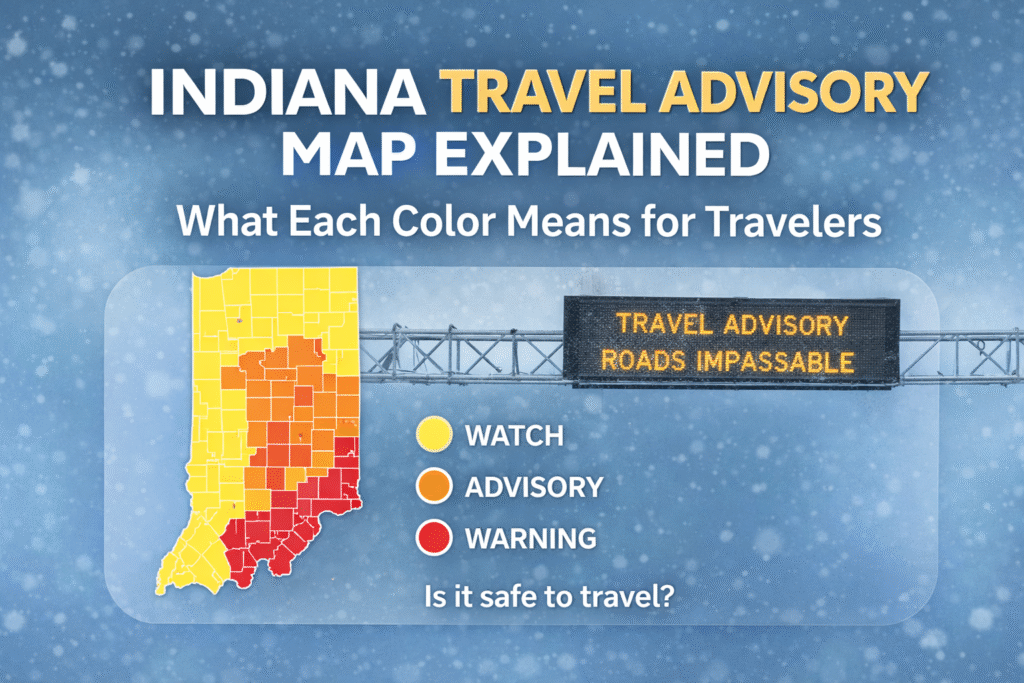
If you’re seeing Indiana travel advisories on the news or Google and wondering “Is it safe to drive?” or “What does this color actually mean?” — you’re not alone.
Indiana travel advisory maps can look confusing at first, especially when counties are marked in different colors. This guide explains exactly what each advisory level means, how it affects travelers, and when you should or shouldn’t be on the road.
No panic. Just clarity.
What Is an Indiana Travel Advisory Map?
An Indiana travel advisory map is a safety map issued by the state to inform drivers and travelers about road and weather conditions. Advisories are issued county by county, not for the entire state at once.
These advisories are most common during:
- Snowstorms and ice
- Heavy rain or flooding
- Low visibility conditions
- Severe weather events
The goal is simple: help people make safer travel decisions.
Indiana Travel Advisory Levels (Explained Simply)
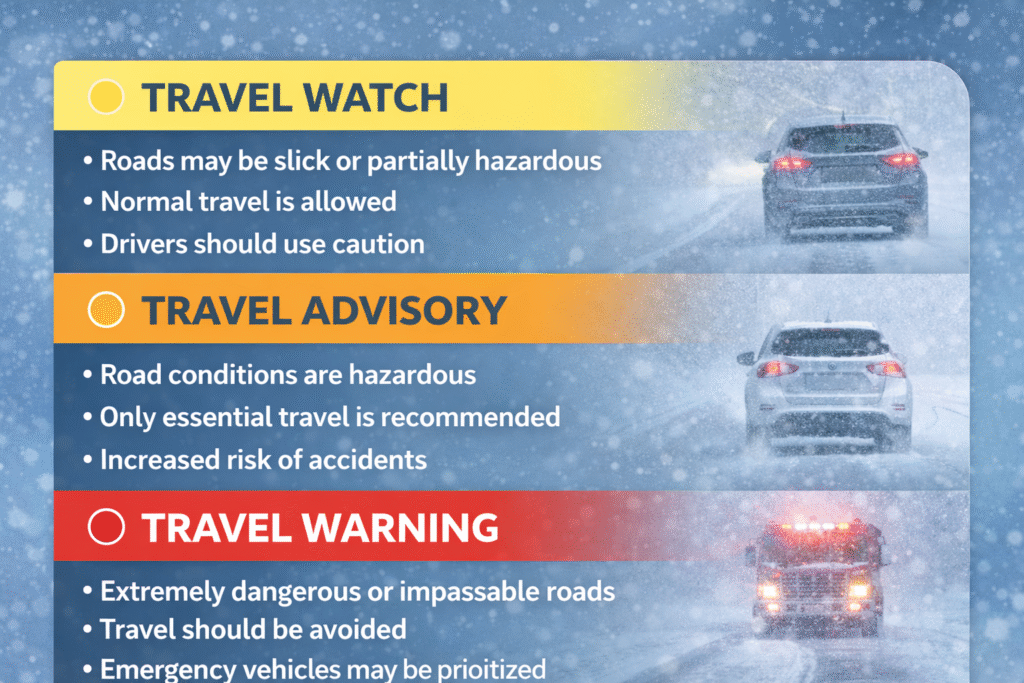
Indiana uses three advisory levels, shown by colors on the map.
🟡 Travel Watch (Yellow)
- Roads may be slick or partially hazardous
- Normal travel is allowed
- Drivers should use caution
What this means for travelers:
You can usually travel, but drive carefully and allow extra time.
🟠 Travel Advisory (Orange)
- Road conditions are hazardous
- Only essential travel is recommended
- Increased risk of accidents
What this means for travelers:
If your trip isn’t necessary, it’s better to delay until conditions improve.
🔴 Travel Warning (Red)
- Extremely dangerous or impassable roads
- Travel should be avoided
- Emergency vehicles may be prioritized
What this means for travelers:
Do not travel unless it’s an emergency. This is the highest alert level.
How to Read the Indiana Travel Advisory Map
Each county on the map is color-coded:
- Yellow = Watch
- Orange = Advisory
- Red = Warning
Counties can change status quickly depending on weather updates, so it’s important to check the map before starting your trip, especially in winter or during storms.
Is It Safe to Travel During an Indiana Travel Advisory?
It depends on:
- The advisory level
- Your vehicle type
- Distance and route
- Time of day
- Weather changes
General rule:
- Yellow → usually safe with caution
- Orange → reconsider travel
- Red → avoid travel
When in doubt, waiting is often the safest option.
Helpful Travel Tips During Advisory Periods
- Check advisories before leaving home
- Carry emergency supplies (water, phone charger, blankets in winter)
- Avoid rural or lesser-maintained roads
- Monitor local updates for sudden changes
How This Fits Into US Travel Advisory Maps
Indiana advisories are part of a broader U.S. state travel advisory system, where each state issues its own alerts based on local conditions.
For a nationwide explanation of how state travel advisory maps work across the U.S., you can read our full guide here:
👉 How to Read US State Travel Advisory Maps (INDOT, DHS & Weather Alerts Explained)
Travelers can view real-time county updates on the official Indiana Travel Advisory Map provided by the Indiana Department of Transportation (INDOT).
Final tip for Indiana travelers:
Travel advisory maps can change quickly during winter storms, freezing rain, or overnight weather shifts. Always recheck the Indiana Travel Advisory Map on the day of travel, allow extra time for delays, and keep basic emergency supplies in your vehicle in case road conditions worsen.
Final Thoughts
Travel advisories aren’t meant to scare travelers — they’re meant to protect people and prevent accidents. Understanding the Indiana travel advisory map helps you make smarter decisions, stay flexible, and travel safely when conditions allow. For travelers checking conditions beyond Indiana, see our complete guide on How to Read US State Travel Advisory Maps.
If conditions look risky, postponing a trip is often the best choice.