
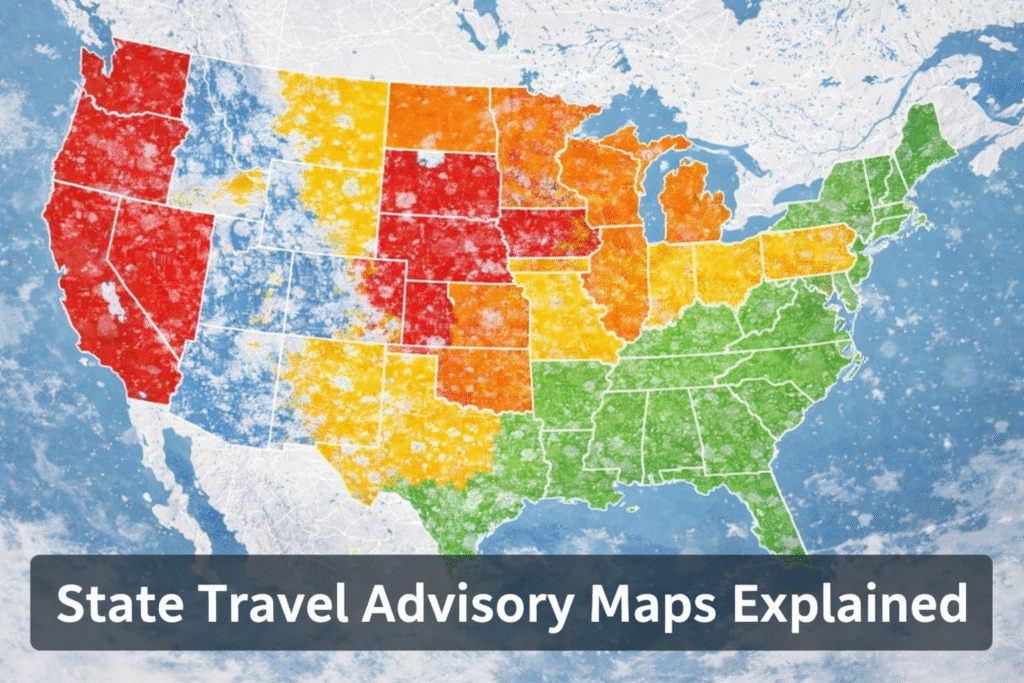
State travel advisory maps often sound alarming, but most do not mean trips must be canceled. This guide explains what travel advisory maps actually mean, how to read them correctly, and how travelers can make calm, informed decisions. Travel advisories often sound alarming, but most do not mean trips must be canceled. This guide explains what travel advisory maps actually mean, how to read them correctly, and how travelers can make calm, informed decisions.
What Is a State Travel Advisory Map?
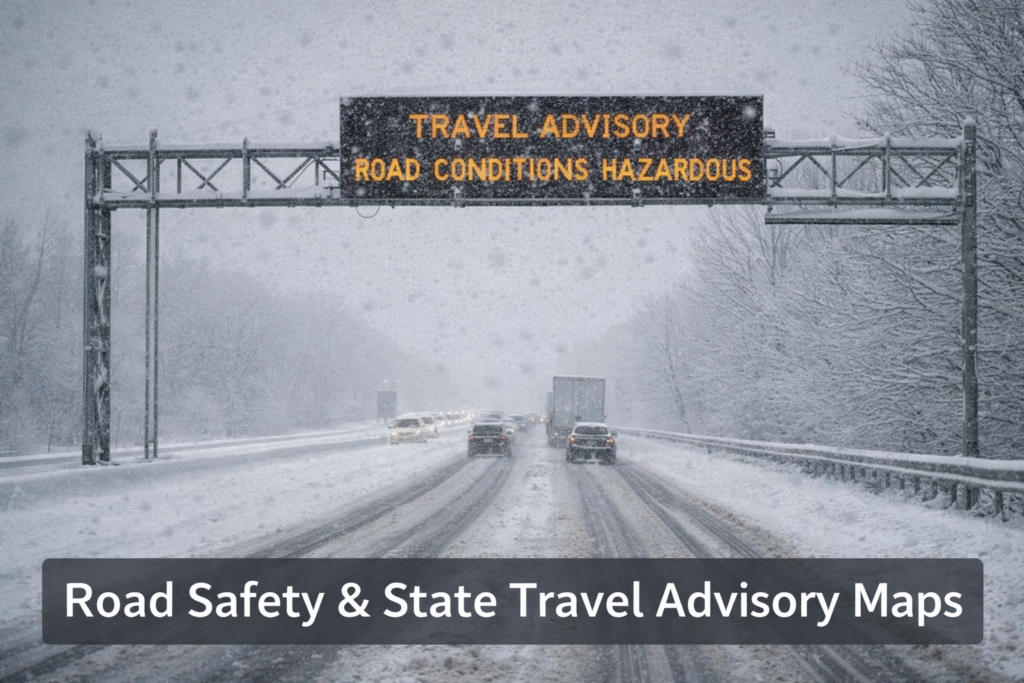
A state travel advisory map is an official, real-time safety tool published by government agencies. These maps are designed to inform residents and travelers about current conditions that may affect travel.
They typically cover:
- Road conditions
- Severe weather impacts
- Temporary travel cautions
- Emergency or safety updates
Travel advisories are informational, not automatic travel bans.
Who Issues Travel Advisories in the United States?
There is no single authority for travel advisories in the US. Different agencies handle different situations. Official state transportation departments publish real-time state travel advisory maps during severe weather conditions.
State Departments of Transportation (Example: INDOT)
If you’re traveling through Indiana, see our detailed breakdown here:
State DOT advisories usually focus on:
- Winter driving conditions
- Road closures
- Ice, snow, or flooding
- Highway safety levels
These advisories are especially important for:
- Road trips
- RV travel
- Winter travel planning
Department of Homeland Security (DHS)
The Department of Homeland Security provides national-level alerts related to:
- Major emergencies
- Infrastructure disruptions
- Widespread safety concerns
DHS advisories are broader and are usually referenced during large-scale events.
Weather-Based Advisory Systems
Weather agencies work alongside travel authorities to issue alerts related to:
- Winter storms
- Flooding
- Extreme temperatures
Weather alerts often trigger travel advisories, but they are not the same thing.
How to Read Travel Advisory Levels (Simple Explanation)
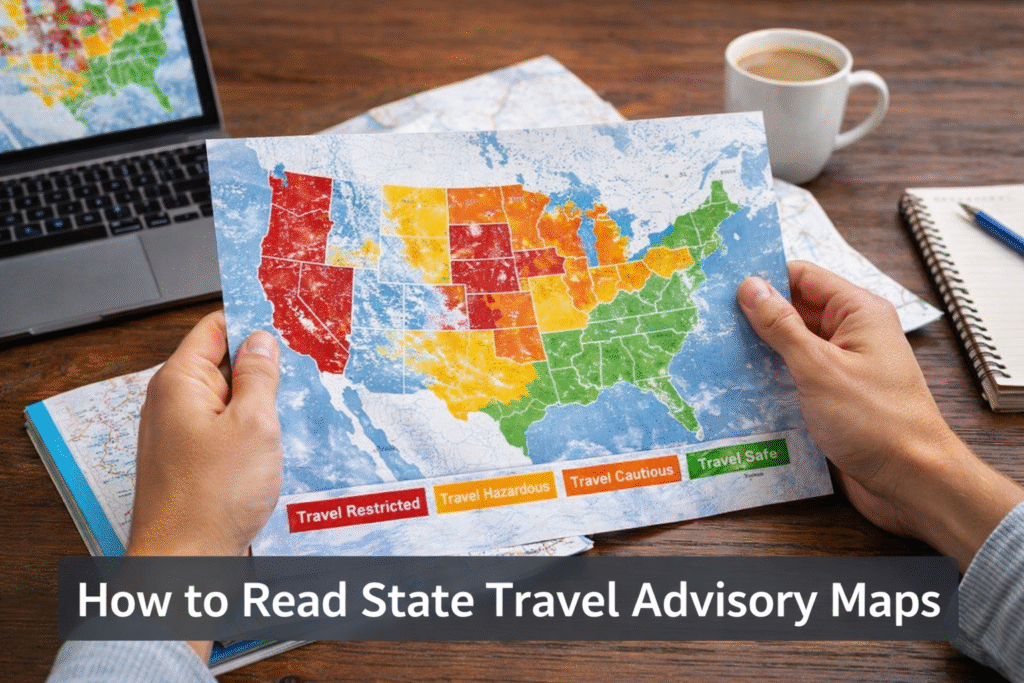
Most state advisory maps use color-coded levels. While wording may differ, the meaning is generally consistent.
🟢 Normal / Low Risk
- Roads are open
- Travel is safe under normal conditions
🟡 Advisory / Use Caution
- Conditions may be changing
- Roads may be slick or partially affected
- Travel is allowed with extra care
🔴 Warning / Restricted
- Dangerous conditions present
- Road closures possible
- Travel strongly discouraged unless necessary
Important:
Most red-level advisories apply to driving, not flying or staying indoors.
Why Travel Advisory Maps Suddenly Trend Online
When advisory maps trend in searches, it usually means:
- A storm or weather system is moving through
- People are checking road safety before travel
- Travelers want confirmation, not cancellation
This is planning behavior, not panic.
Does a Travel Advisory Mean You Should Cancel Your Trip?
Not automatically.
Before changing plans, consider:
- Whether the advisory affects your destination or just the route
- If travel timing can be adjusted
- Whether alternative transportation is available
Many advisories:
- Affect only certain counties
- Are temporary
- Are lifted quickly once conditions improve
Smart Travel Tips During Advisory Periods
When advisories are active, smart planning makes a difference.
Helpful steps include:
- Monitoring official maps regularly
- Allowing flexible travel timing
- Planning indoor activities as backups
- Avoiding reliance on social media rumors
For road and RV travel, always prioritize:
- State DOT maps
- Local weather alerts
- Official government updates
How to Stay Updated Without Stress
The most reliable information comes from:
- State Department of Transportation websites
- DHS alert systems
- Local weather authorities
Avoid:
- Viral screenshots
- Sensational headlines
- Unverified social posts
Accurate information leads to better decisions.
Frequently Asked Questions
Do travel advisories mean travel is banned?
No. Most advisories are warnings, not restrictions. Travel is usually permitted with caution.
Are travel advisories only about driving?
Many state advisories focus on road conditions. Flights and indoor activities are often unaffected.
How long do travel advisories last?
Most advisories are temporary and lifted once weather or conditions improve.
Final Thoughts
Travel advisory maps are designed to inform, not frighten. Travelers concerned about safety conditions may also want to review destinations that require extra caution before planning a trip.
Understanding how to read these maps helps travelers:
- Avoid unnecessary cancellations
- Travel more safely
- Make confident, well-planned decisions
When advisories are active, flexibility and preparation matter more than panic.