
Winter RV Essentials for Beginners: Stay Warm, Safe & Stress-Free
Winter RV essentials for beginners are the key to staying warm, safe, and stress-free during cold-weather adventures. If you’re planning your first winter RV trip, the right gear can prevent frozen pipes, icy breakdowns, and expensive mistakes.
This guide breaks down exactly what winter RV essentials you need, plus smart upgrades that make cold-weather camping comfortable instead of chaotic.
This guide covers exact winter RV essentials you should bring, plus smart upgrades to avoid winter headaches. For scenic winter RV travel inspiration, check out our Jasper Alberta travel guide.
❄️ Why Winter RV Essentials for Beginners Matter
Winter RV travel isn’t the same as summer camping. Roads get icy, temperatures drop fast, and your RV systems need protection. With the right essentials, you can enjoy cozy mornings, beautiful snowy views, and safe travel without unexpected problems.
🔧 Winter RV Essentials for Beginners: Safety Checklist
| Item | Why You Need It |
|---|---|
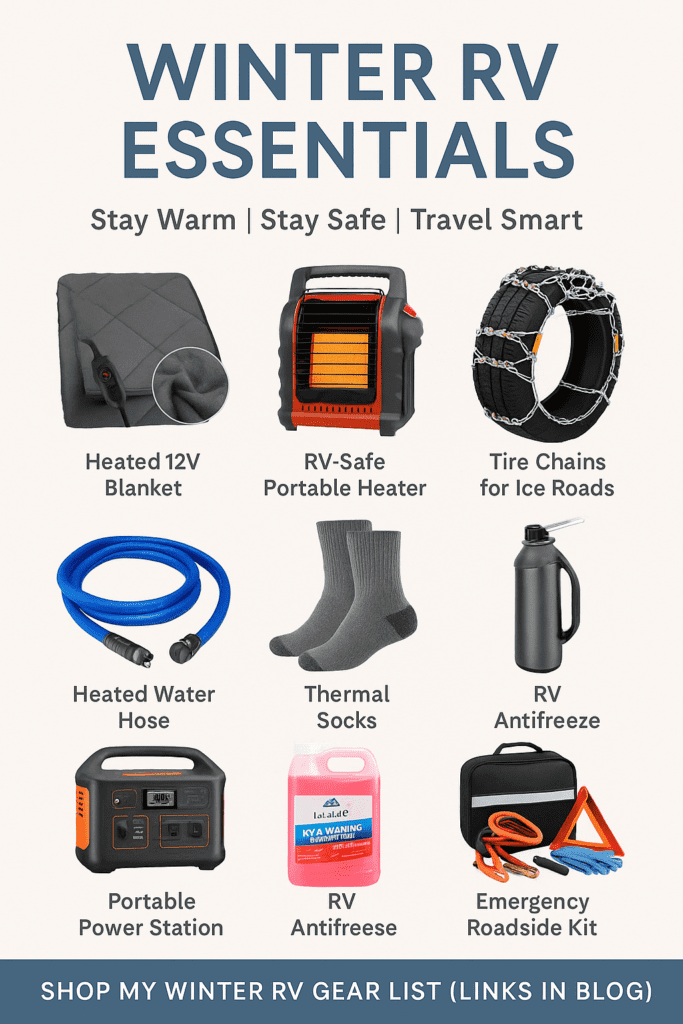
| Tire Chains | Better traction on icy or snowy roads |
| RV-Rated Emergency Kit | Tools, booster cables, first-aid, reflective gear |
| Propane Leak Detector | Winter means more heater use; safety first |
| Carbon Monoxide Detector | Must-have when heating inside |
| RV Roadside Assistance Plan | Winter breakdowns are no joke |
🔥 Stay Warm: Winter RV Essentials for Beginners
| Item | Why You Need It |
|---|---|
| Portable Space Heater (RV-Safe) | Primary or backup heat source |
| Heated Blanket (12V + Electric) | Warm nights without running heater all night |
| Thermal Socks & Gloves | Warm extremities = happy trip |
| Insulated Travel Mug | Keeps drinks hot longer in cold RV interiors |
| Portable Power Station | Backup power during cold-weather boondocking |
Each of these winter RV essentials for beginners protects either your water system, heating system, or driving safety. Skipping even one can lead to costly repairs or dangerous roadside situations.
💧 Protect Your Water & Plumbing
| Item | Why You Need It |
|---|---|
| Heated Water Hose | Keeps water flowing in freezing temps |
| RV Antifreeze | Prevents pipe damage |
| Pipe Insulation Foam | Extra freeze protection |
| Sewer Hose Support | Prevents freezing + keeps drainage smooth |
🍳 Cooking & Comfort Items
| Item | Why It Helps |
|---|---|
| Portable Propane Stove | Cook even if electricity fails |
| Dutch Oven / Thermal Cooker | Energy-efficient winter cooking |
| Insulated Food Containers | Hot food stays hot longer |
Printable Winter RV Essentials for Beginners Checklist
- Tire chains
- CO & propane detector
- Emergency roadside kit
- Portable heater
- Heated blanket
- Heated water hose
- RV antifreeze
- Pipe insulation foam
- Power bank / portable power station
- Thermal clothing & gloves
Use this printable winter RV essentials for beginners checklist before every cold-weather trip. A five-minute review can prevent frozen pipes, heating failures, or dangerous winter driving conditions
Save this checklist before your trip.
These are the exact winter RV essentials I recommend so you stay warm, safe, and stress-free out there.
Common Winter RV Mistakes Beginners Make
Even with the right winter RV essentials for beginners, mistakes can still happen. Avoid these costly errors:
• Not insulating water lines properly
• Forgetting to winterize tanks before freezing nights
• Running heaters without carbon monoxide protection
• Underestimating propane usage in sub-zero temperatures
• Driving without checking mountain pass closures
Preparing correctly makes winter RV travel safe, comfortable, and unforgettable.
Ready for a Safe Winter RV Trip?
If you don’t already own a fully winterized RV, renting one designed for cold weather can prevent frozen tanks, insulation issues, and expensive repairs. If you’re exploring the Pacific Northwest, also see our Whistler Spring Break guide.
Compare Winter-Ready RV Rentals:
👉 RVshare (US)
👉 Rvezy (US & Canada)
👉 Outdoorsy
👉 Cruise America
🧠 Final Tips
- Keep propane topped up
- Run your furnace periodically
- Don’t leave water hoses exposed overnight
- Monitor inside temperature
- Always travel with emergency hot packs & blankets
Affiliate Disclosure:
This post contains affiliate links. I may earn a small commission at no extra cost to you.