
Updated September 29, 2026
Affiliate disclosure: This post contains affiliate links. If you make a booking or purchase through one of them, Where Is Mark may earn a commission at no extra cost to you. Recommendations are selected for usefulness and trip fit, not paid placement.
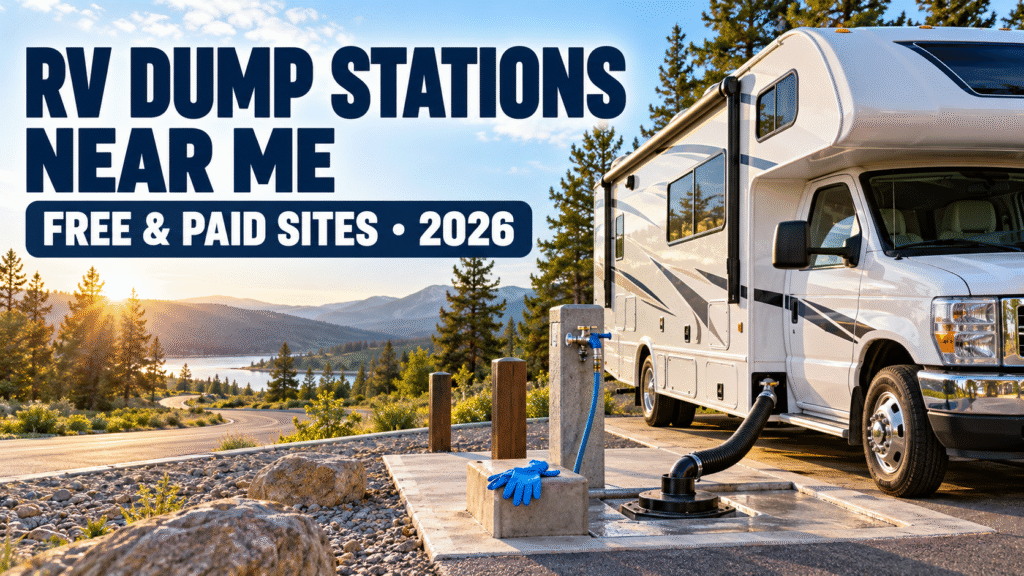
Searching for RV dump stations near me happens when tanks are full. Stations are available at campgrounds, parks, travel centers and municipal facilities, but listings may be outdated. Locate options and confirm before driving.
Quick Answer: How Do I Find an RV Dump Station Near Me?
Search Google Maps or an RV trip-planning app for “RV dump station near me.” Also check official state-park websites, campgrounds, travel centers and municipal facilities. Before driving, confirm:
- Is the dump station open today?
- Can non-guests use it?
- Are both black and gray water accepted?
- What is the current fee and payment method?
- Is potable water available, or only non-potable rinse water?
Some stations are free for registered guests. Public facilities may charge around $5–$10, while private prices vary. Never rely on an old listing alone.
What Is an RV Dump Station?
An RV dump station connects RV holding tanks to an approved sewer or septic system.
- Black water comes from the RV toilet and contains human waste.
- Gray water comes from sinks and showers and may contain soap, food particles and bacteria.
- Fresh water is the clean water used for drinking, cooking and washing.
Black and gray water belong in an approved dump-station inlet—not on the ground or in a storm drain. The U.S. Environmental Protection Agency publishes safe-disposal guidance, and local rules may be stricter.
Where to Find RV Dump Stations Near Me
1. Google Maps and RV trip-planning tools
Try “free RV dump station near me,” “RV dump station open now,” or “RV dump station near Dallas.” Read recent reviews, call to confirm and save a backup. For longer routes, RV LIFE Trip Wizard can help organize RV-friendly stops.
2. Campgrounds and RV parks
Many campgrounds include dumping for guests, while some charge non-guests. Ask about public access, rig length and whether fresh-water filling is separate from the rinse hose.
3. State and national parks
Texas travelers can use the Texas State Parks map and select Dump Station. National-park facilities vary; some are seasonal, free for campers or paid per use.
4. Travel centers and truck stops
Selected highway travel centers provide dump stations and other RV services. Use Pilot’s RV-services page, but verify the individual location.
5. RV dealers, service centers and storage facilities
Some dealerships, repair centers and storage lots allow public dumping during business hours. Access may be customer- or member-only.
6. Municipal wastewater facilities
Some cities and sanitation districts operate public disposal points. Check the official local-government website. Never use an unmarked sewer connection without permission.
Free vs. Paid RV Dump Stations
| Location type | Typical access | What to verify |
|---|---|---|
| Campground or RV park | Often included for guests; non-guests may pay | Guest policy, hours and rig length |
| State or national park | Free or paid, sometimes seasonal | Entrance fee, dump fee and closures |
| Travel center | Usually paid at participating locations | Exact location, payment and access lane |
| RV dealer or service center | Free, customer-only or paid | Business hours and eligibility |
| Municipal facility | Free or low-cost where offered | Residency rules and operating hours |
Driving far for a free station may cost more in fuel than paying nearby. Some results for RV dump stations near me are free, while others charge a small fee or require a campground reservation.
How to Use an RV Dump Station Safely
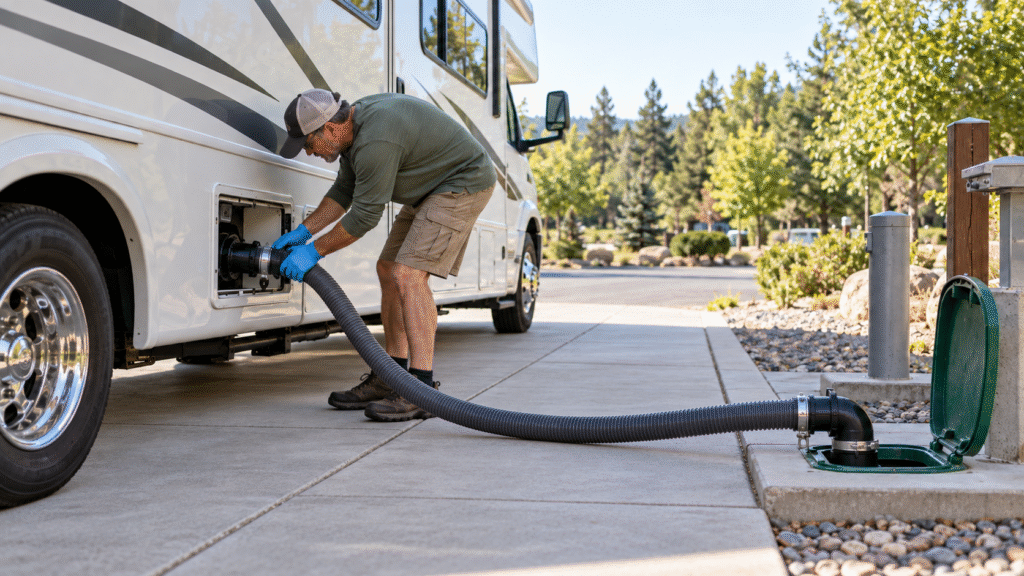
Bring gloves, a dependable sewer hose, a secure adapter, a dedicated non-potable rinse hose and disinfectant. Keep drinking-water equipment separate.
- Position the RV. Park close enough that the hose reaches comfortably.
- Put on gloves. Check the hose and fittings for damage.
- Secure both ends. Connect the RV outlet and dump inlet before opening a valve.
- Empty the black tank first. This removes toilet waste before the cleaner gray water passes through the hose.
- Empty the gray tank second. Gray water helps rinse remaining residue from the sewer hose.
- Rinse only where permitted. Use the marked non-potable hose. Do not delay others with a lengthy flush.
- Close every valve. Disconnect, cap the outlet and sanitize your hands and equipment.
Winnebago’s beginner guidance also recommends black water first and separate rinse and drinking-water hoses.
The Five-Question “Dump Stop Check”
Confirm: open, accessible, accepted waste, price and water type. This prevents a wasted trip.
For Dallas–Fort Worth routes, searching for RV dump stations near me along the highway you will use—such as I-35E, I-35W, I-20 or I-30—often produces better results than searching the entire Metroplex. Check Dallas, Fort Worth, Denton, Lewisville, Grapevine, Arlington and nearby state parks, then save a second option.
Common RV Dumping Mistakes
- Arriving without confirming that the station is open
- Confusing a non-potable rinse hose with drinking water
- Opening a valve before both hose ends are secure
- Dumping gray water on the ground because it “looks clean”
- Waiting until the tanks are completely full
- Leaving spills or blocking the line for an unnecessary tank flush
Improperly released wastewater can carry pollutants into waterways. Use the designated inlet and report spills to the operator. Even after finding RV dump stations near me, I confirm that the facility is open and that my RV can enter and exit safely.
Plan the Rest of Your RV Trip
Need a vehicle? Compare Texas availability through RVshare, RVezy, Cruise America or Outdoorsy. Review mileage, cleaning, waste-tank and dumping rules before paying.
Continue planning with these Where Is Mark guides:
- Best RV Rentals in Dallas, Texas
- 7 Rookie RV Mistakes That Cost First-Time Travelers Thousands
- Winter RV Essentials 2026
Frequently Asked Questions
Where is the nearest RV dump station?
Search Google Maps, campgrounds, state parks, travel centers and municipal facilities. Call to confirm hours, price and public access.
Are RV dump stations free?
Some are free for campground guests. Others charge per use. Entrance or membership fees may still apply.
Can I dump RV gray water on the ground?
Do not assume it is legal. Rules vary, and gray water can contain soap, food waste and bacteria. Use an approved station unless local authorities explicitly permit otherwise.
Should I empty the black tank or gray tank first?
Empty the black tank first and the gray tank second. The gray water helps move remaining residue through the sewer hose.
How often should RV holding tanks be emptied?
Empty tanks before they become completely full and follow the RV or rental company’s instructions.
Final Verdict
To find reliable RV dump stations near me, search, call and keep a backup. Plan early, carry the correct equipment and follow the black-first, gray-second sequence. Legal disposal matters more than saving a few dollars. Before each travel day, I search for RV dump stations near me and confirm the hours, price and RV access directly with the location.
Editorial and Source Note
For this guide, Where Is Mark reviewed guidance from the U.S. Environmental Protection Agency, National Park Service, Texas Parks and Wildlife Department, local wastewater programs, Pilot and Winnebago. Dump-station hours, fees and access can change, so confirm details directly with the facility. Always follow local regulations and your RV manufacturer’s instructions.