
The best RV internet options for remote work in 2026 include Starlink Roam, Verizon hotspots, T-Mobile 5G internet, and RV signal boosters for travelers working remotely across the United States. The best RV internet options for remote work include Starlink Roam, Verizon and T-Mobile 5G hotspots, cellular signal boosters, and campground WiFi backups. Most full-time RV travelers now combine at least two internet sources for reliability while traveling across the United States.
Whether you are a digital nomad, remote employee, content creator, travel blogger, or RV family, reliable internet is now considered essential RV infrastructure — just like power, water, and navigation.
Many travelers now compare different RV internet options for remote work before starting full-time RV living or digital nomad travel.
Why RV Internet Matters More Than Ever in 2026
Remote work is no longer limited to apartments and offices. Thousands of RV travelers now work directly from:
- National parks
- Campgrounds
- Boondocking sites
- RV resorts
- State parks
- Long-term RV stays
But RV internet is different from home internet.
You constantly move between:
- urban areas
- rural highways
- mountains
- deserts
- forests
That means internet coverage changes daily.
The smartest RV travelers build a layered internet setup instead of depending on one single connection.
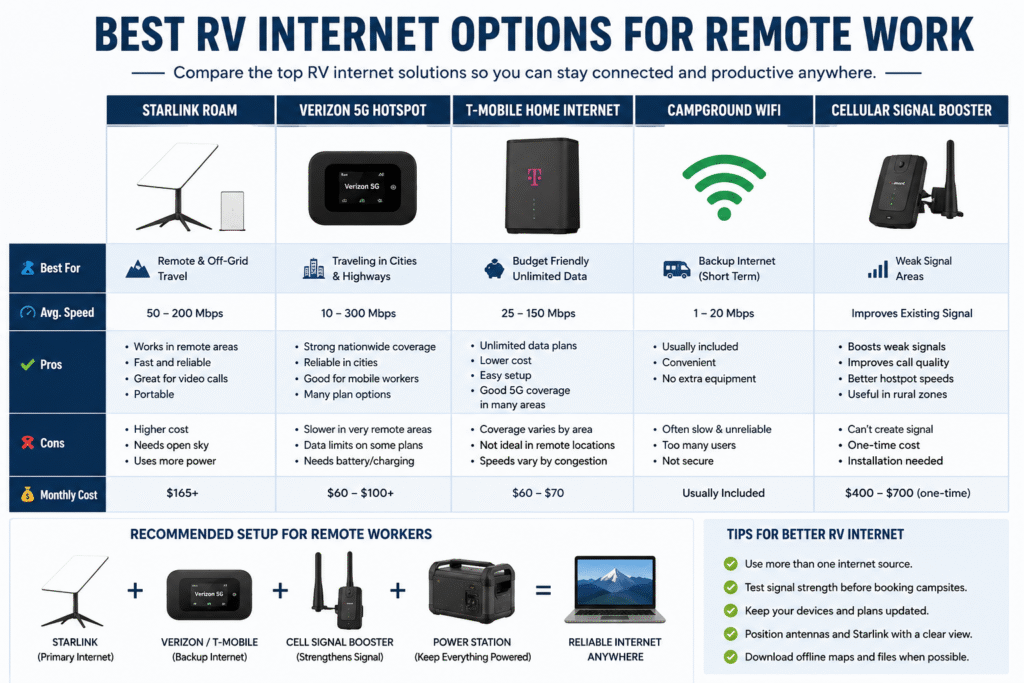
Quick Answer: Best RV Internet Setup in 2026
For most RV travelers working remotely, the ideal setup includes:
| Internet Option | Best For | Reliability |
|---|---|---|
| Starlink Roam | Rural & off-grid RV travel | Excellent |
| Verizon 5G Hotspot | Nationwide coverage | Excellent |
| T-Mobile Home Internet | Budget unlimited data | Very Good |
| Campground WiFi | Backup internet only | Poor–Average |
| Cellular Signal Booster | Weak signal areas | Helpful Add-on |
1. Starlink Roam for RV Travel
Why Starlink Became the #1 RV Internet Choice
Many travelers consider Starlink one of the best RV internet options for remote work in remote camping locations. SpaceX created one of the biggest changes in RV travel.
Before Starlink, internet in remote camping areas was often terrible.
Now RV travelers can work from:
- deserts
- mountains
- national forests
- boondocking land
- remote campgrounds
Starlink uses satellites instead of nearby cell towers.
That means:
- fewer dead zones
- faster speeds
- better rural coverage
You can compare plans, hardware, and coverage directly on the official Starlink website.
Pros of Starlink RV Internet
Excellent for Remote Areas
Works where normal hotspots fail.
Great for Remote Workers
Supports:
- Zoom calls
- YouTube uploads
- blogging
- streaming
- online meetings
Portable
Easy to move between campsites.
Cons of Starlink
Expensive
Higher upfront equipment cost.
Needs Open Sky
Trees can block signal.
Uses More Power
Important for off-grid RV camping.
This is why many RV travelers pair Starlink with portable solar power stations.
RV Power Setup for Starlink
Reliable RV internet also requires reliable RV power.
Many RV travelers now use:
- portable solar generators
- battery stations
- backup power systems
Helpful RV power resources:
Reliable RV internet also depends on proper power management, especially during cold-weather camping. Check our Winter RV Essentials guide for more preparation tips.
2. Verizon 5G Hotspots for RV Internet
Verizon Communications still offers some of the strongest nationwide RV coverage in the United States.
This is especially useful for:
- interstate travel
- cities
- suburban campgrounds
- highway routes
Best Use Cases
Verizon works well for:
- remote employees
- video calls
- travelers constantly moving
- RV road trips
Why Many RVers Use Verizon + Starlink Together
Smart RV travelers avoid depending on one internet source.
Typical setup:
- Starlink for remote camping
- Verizon hotspot for highways and cities
This creates backup redundancy.
That matters during:
- storms
- weak satellite visibility
- crowded campgrounds
- network slowdowns
If you are planning your first RV trip, read our RVshare vs Outdoorsy vs RVezy vs Cruise America comparison guide before choosing a rental platform.
3. T-Mobile RV Internet
T-Mobile US became popular among RV travelers because of:
- unlimited data plans
- improving 5G speeds
- lower pricing
Best for Budget RV Travelers
T-Mobile is often cheaper than Verizon.
Good for:
- streaming
- blogging
- social media
- moderate remote work
Weaknesses
Coverage can still struggle in:
- mountains
- rural deserts
- deep forest camping
That is why many RV travelers still keep backup internet options.
4. Campground WiFi
Campground WiFi should NEVER be your primary work internet.
Most campground internet struggles because:
- too many users
- outdated routers
- limited bandwidth
- crowded evenings
When Campground WiFi Is Useful
It still works well for:
- casual browsing
- checking email
- downloading maps
- backup access
5. Cellular Signal Boosters
A signal booster improves weak cellular connections.
Popular for:
- rural highways
- state parks
- weak campground signals
What Signal Boosters Actually Do
A booster cannot create signal from nothing.
But it can:
- strengthen weak coverage
- improve call quality
- stabilize hotspot speeds
Very useful for RVers traveling through:
- Texas deserts
- Utah national parks
- mountain highways
- remote boondocking areas
Best RV Internet Setup for Different Travelers
Full-Time RVers
Recommended:
- Starlink Roam
- Verizon hotspot
- signal booster
Weekend RV Travelers
Recommended:
- T-Mobile hotspot
- campground WiFi backup
Remote Workers & Content Creators
Recommended:
- Starlink
- Verizon backup
- portable power station
How Much RV Internet Costs in 2026
| Setup | Estimated Monthly Cost |
|---|---|
| Basic Hotspot Plan | $50–$90 |
| Starlink Roam | $165+ |
| Signal Booster | One-time $400–$700 |
| Campground WiFi | Usually included |
RV Internet Tips for Beginners
1. Never Depend on One Internet Source
Always keep backups.
2. Download Offline Maps
Remote areas can lose coverage suddenly.
3. Test Campground Coverage Before Booking
Some RV parks advertise WiFi that barely works.
Travelers can also review broadband availability and internet coverage information through the FCC official website.
4. Power Matters
Internet devices require reliable RV batteries and charging systems.
Best RV Trips for Remote Workers
Remote workers increasingly travel through:
- Texas Hill Country
- Arizona desert routes
- Utah Mighty 5
- Florida Keys
- Colorado mountain towns
Before visiting national parks, always check campground access, closures, and connectivity updates through the National Park Service website.
If you need an RV rental for your trip:
Compare RV Rental Platforms
- 👉 RVshare
- 👉 Outdoorsy
- 👉 RVezy
- 👉 Cruise America
Frequently Asked Questions
Is Starlink worth it for RV travel?
Yes. For remote workers and full-time RV travelers, Starlink is currently one of the best RV internet options available in 2026.
What is the best RV internet for remote work?
Most RV travelers use a combination of:
- Starlink
- Verizon hotspot
- cellular booster
instead of relying on one single connection.
Does campground WiFi work well?
Usually not for full-time remote work. It should only be used as backup internet.
Can you work remotely while living in an RV?
Yes. Thousands of people now work remotely full-time while traveling in RVs across the United States.
Choosing the right RV internet options for remote work can improve productivity, video calls, streaming, and overall RV travel reliability.
Final Thoughts
The best RV internet setup in 2026 depends on where and how you travel. Remote workers who stay near cities may survive with a hotspot alone, but travelers exploring national parks and off-grid destinations usually need a stronger setup like Starlink combined with cellular backup.
Reliable internet is no longer optional for modern RV travel. It is now part of the core RV lifestyle. The best RV internet options for remote work depend on your travel style, budget, and how often you camp off-grid.
Before your next road trip, make sure your RV internet, RV power system, and backup connectivity plan are ready.