
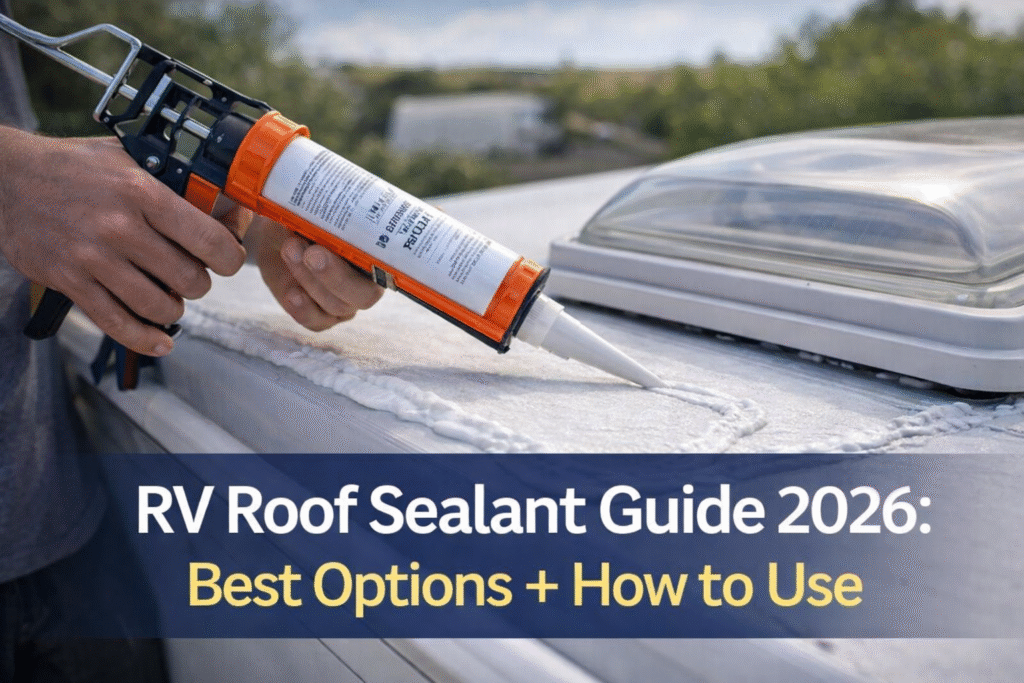
✅ Quick Answer
RV roof sealant is essential to protect your RV from leaks, cracks, and expensive damage. In this guide, we’ll cover the best RV roof sealant options, how to apply them, and how to avoid costly repairs.
👉 Ignoring roof sealing can lead to $1,000–$5,000 repair costs, so sealing regularly is essential.
According to RV maintenance experts, regular roof inspection and sealing can prevent costly water damage over time.
🔍 What is RV Roof Sealant (And Why It Matters)
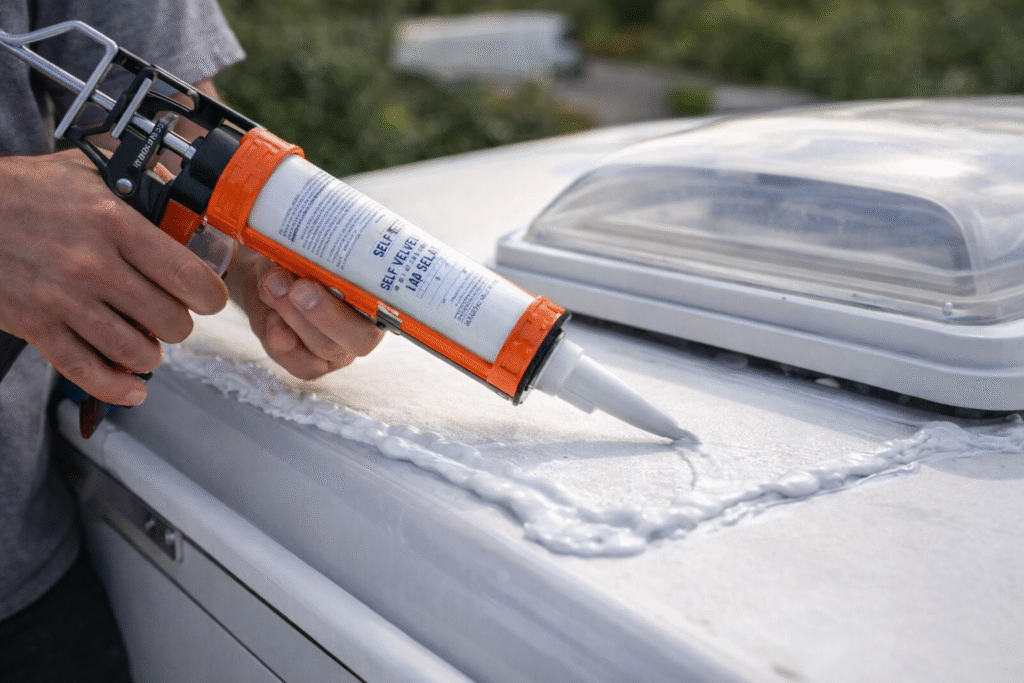
RV roof sealant is a protective layer applied to seams, vents, and joints to prevent water leaks, heat damage, and cracking.
In places like Dallas, Austin, and Houston, extreme heat + sudden rain =
👉 fastest way to destroy your RV roof.
🚨 Signs You NEED RV Roof Sealant (Don’t Ignore This)
- Water stains inside ceiling
- Cracks or peeling on roof edges
- Soft spots on roof
- Visible gaps around vents or AC units
👉 If you see even ONE of these, fix it immediately.
🏆 Best RV Roof Sealant Types (2026 Guide)
1. Self-Leveling Sealant (Most Recommended)
- Best for: Roof seams, vents
- Flows automatically → smooth finish
- Ideal for beginners
👉 Best overall choice for most RV owners
2. Non-Sag Sealant
- Best for: Vertical surfaces
- Thick consistency
- Stays in place
3. Silicone Sealant
- Best for: UV protection
- Long-lasting
- Slightly harder to apply
4. Rubber Roof Coating
- Best for: Full roof protection
- Extends roof life
- Higher cost but long-term benefit
💰 Cost Breakdown (What You’ll Actually Spend)
- Sealant tube: $10 – $25
- Full roof coating: $100 – $300
- Professional service: $300 – $1,500
👉 DIY = cheapest + best ROI
🔧 How to Apply RV Roof Sealant (Step-by-Step)
Step 1: Clean the roof
Remove dirt, dust, old sealant
Step 2: Inspect damage
Check seams, edges, vents
Step 3: Apply sealant
- Use caulking gun
- Apply evenly
- Let it self-level
Step 4: Let it cure
- 24–48 hours
- Avoid rain
⚠️ Common Mistakes (Costly Errors)
❌ Applying on dirty surface
❌ Using wrong sealant type
❌ Ignoring small cracks
❌ Not checking roof regularly
👉 These mistakes lead to expensive repairs
🌎 Texas-Specific Tips
In Texas climate, you must:
- Use UV-resistant sealants
- Check roof every 3–4 months
- Reapply before summer heat peaks
👉 Heat expansion causes cracks faster here than most states
🆚 RV Roof Sealant vs Roof Replacement
| Option | Cost | Lifespan |
|---|---|---|
| Sealant | $20–$300 | 1–3 years |
| Replacement | $3,000–$10,000 | 10+ years |
👉 Smart owners maintain sealant → avoid replacement
💡 Pro Tips
- Always keep extra sealant in your RV kit
- Inspect roof after every long trip
- Focus on edges and joints first
- Use ladder safely — most injuries happen here
🔗 Where to Buy RV Roof Sealant (Best Deals)
For reliable RV roof sealant and maintenance tools, check trusted suppliers below:
👉 Shop RV sealants & accessories here (TechnoRV)
❓ FAQs
How often should I reseal my RV roof?
Every 6–12 months depending on weather and usage.
What is the best sealant for RV roofs?
Self-leveling sealant is best for most RV roofs.
Can I apply RV sealant myself?
Yes. Most RV owners do it themselves with basic tools.
How long does RV roof sealant last?
Typically 1–3 years depending on climate.
🛡️ Protect Your RV Trip (Avoid Unexpected Costs)
Even with proper RV roof sealant, unexpected damage or trip issues can still happen—especially during long road trips.
👉 Travel insurance helps cover:
- Trip cancellations
- Emergency repairs
- Unexpected expenses
👉 Check travel insurance options here
🧭 Final Thoughts
RV roof sealant is one of the cheapest ways to prevent expensive damage.
👉 A $20 fix today can save you thousands later.
If you own or rent an RV in Texas, don’t wait—
check your roof, seal the weak spots, and protect your investment.