
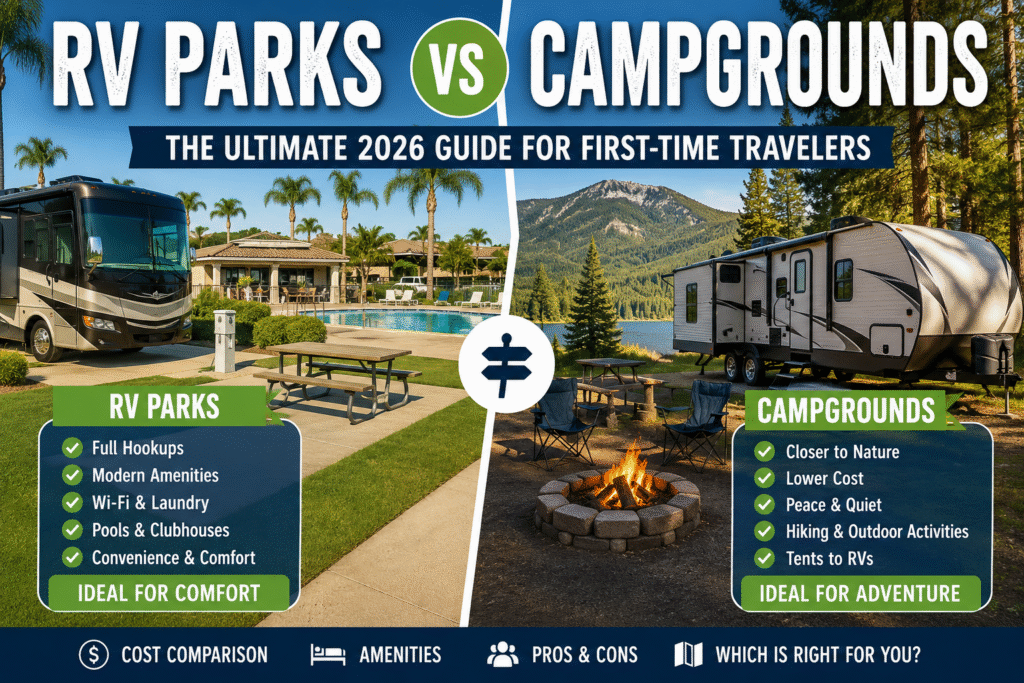
RV Parks vs Campgrounds is one of the most common questions first-time RV travelers ask before planning a road trip. Although both offer places to stay overnight, they provide very different experiences, amenities, and costs.
“What’s the difference between an RV park and a campground?”
Many people use these terms interchangeably, but they aren’t exactly the same.
Choosing the wrong place to stay can affect your comfort, budget, and overall travel experience. Some travelers prefer full-service RV parks with modern amenities, while others enjoy the peaceful surroundings of campgrounds close to nature.
This guide explains everything you need to know so you can confidently choose the best option for your next road trip. If you’re planning your first RV trip, don’t miss our guide on Best AI Apps for RV Travelers to discover tools that make route planning, campground searches, and navigation much easier.
When comparing RV Parks vs Campgrounds, the main difference is the type of experience they provide. RV parks usually focus on convenience, full hookups, Wi-Fi, laundry facilities, and modern amenities. Campgrounds often focus more on nature, outdoor recreation, privacy, and lower nightly prices.
For first-time RV travelers, an RV park may be easier because staff, utilities, and services are usually available. Campgrounds can be better for travelers who enjoy hiking, campfires, wildlife, and peaceful natural surroundings. Neither option is always better. The right choice depends on your budget, RV size, comfort needs, and travel style.
Table of Contents
- What Is an RV Park?
- What Is a Campground?
- RV Parks vs Campgrounds
- Cost Comparison
- Amenities Comparison
- Which Is Better for Families?
- Which Is Better for Pets?
- Which Is Better for Beginners?
- Pros and Cons
- Frequently Asked Questions
- Final Verdict
What Is an RV Park?
An RV park is a property specifically designed for recreational vehicles.
Most RV parks offer modern facilities and convenient services that make traveling easier.
Typical amenities include:
- Full hookups (water, sewer, electricity)
- Wi-Fi
- Laundry facilities
- Swimming pools
- Clubhouses
- Dog parks
- Fitness centers
- Pull-through sites
- Concrete pads
- Dump stations
Many RV parks are located close to cities, attractions, shopping centers, and restaurants.
They are ideal for travelers looking for convenience and comfort.
Different Types of RV Parks
Not every RV park provides the same experience. Some are simple overnight stops, while others operate more like full-service resorts.
Family-Friendly RV Parks
Family-friendly RV parks may include swimming pools, playgrounds, game rooms, sports courts, and organized activities. These parks are useful for families traveling with young children because they offer entertainment and convenient facilities in one location.
Luxury RV Resorts
Luxury RV resorts may offer paved sites, fitness centers, clubhouses, resort-style pools, golf access, restaurants, and premium landscaping. These properties usually cost more than standard RV parks but provide a more comfortable vacation experience.
Long-Term RV Parks
Long-term RV parks allow travelers to stay for several weeks or months. Monthly rates may be cheaper than paying nightly, although electricity and other utilities may cost extra.
Overnight RV Parks
Some RV parks are designed mainly for short stays. They are often located near highways and provide pull-through sites, basic hookups, and convenient access for travelers continuing their journey the next morning.
What Is a Campground?
Campgrounds focus more on outdoor experiences than luxury amenities.
Some campgrounds welcome:
- RVs
- Travel trailers
- Pop-up campers
- Tents
- Cabins
Campgrounds are often located inside:
- National Parks
- State Parks
- National Forests
- Recreation Areas
- Lakes
- Mountains
Amenities may include:
- Picnic tables
- Fire rings
- Restrooms
- Hiking trails
- Fishing
- Nature programs
- Limited electric hookups
Many campgrounds do not provide sewer connections.
Different Types of Campgrounds
Campgrounds also vary depending on who operates them and where they are located.
National Park Campgrounds
National park campgrounds often provide direct access to hiking trails, scenic viewpoints, lakes, and wildlife. Amenities may be limited, and many locations do not offer full hookups. Popular sites can fill months in advance.
Many national park campgrounds can be reserved through the National Park Service (NPS) website, where you can find official information about camping regulations, seasonal availability, and park amenities.
State Park Campgrounds
State park campgrounds are often affordable and may offer electric hookups, showers, picnic tables, fishing, and recreational activities. Facilities vary by state and location.
Private Campgrounds
Private campgrounds may provide more amenities than public campgrounds. Some include full hookups, pools, laundry rooms, cabins, playgrounds, and Wi-Fi.
National Forest Campgrounds
National forest campgrounds usually offer a quieter and more rustic experience. Travelers may find basic campsites, fire rings, picnic tables, and access to hiking or fishing.
Dispersed Camping
Dispersed camping means staying outside a developed campground on permitted public land. It may be free, but travelers should expect no hookups, restrooms, trash service, or drinking water. This option is best for experienced campers who can safely manage their own power, water, and waste.
RV Parks vs Campgrounds
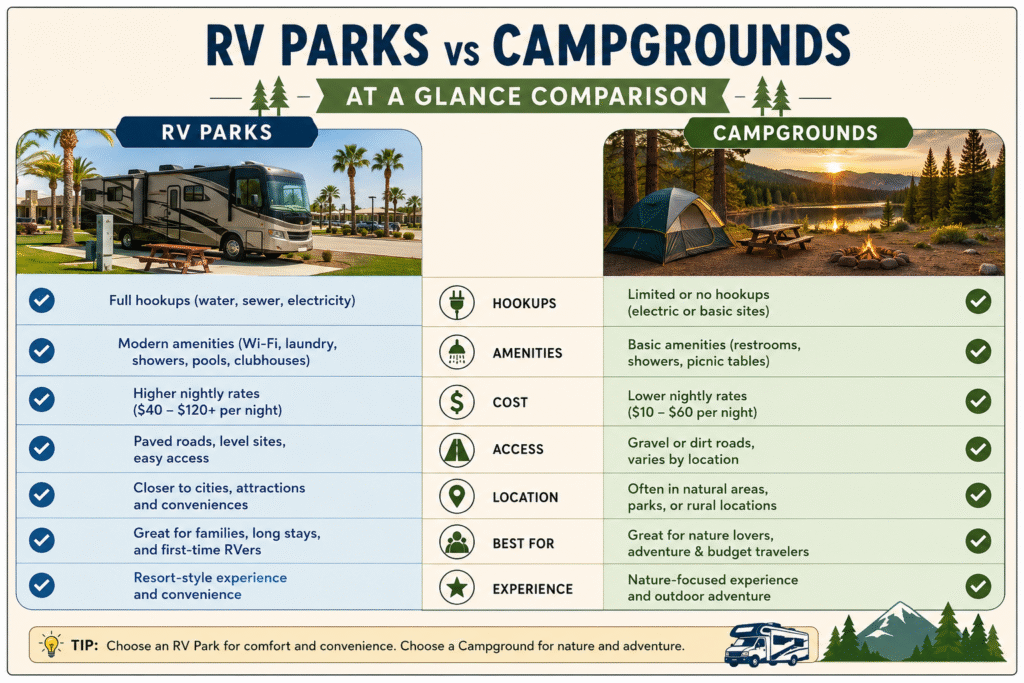
| Feature | RV Parks | Campgrounds |
|---|---|---|
| Full Hookups | ✅ Usually | ❌ Sometimes |
| Sewer | ✅ | Limited |
| Water | ✅ | Usually |
| Electricity | ✅ | Sometimes |
| Wi-Fi | Often | Rare |
| Swimming Pool | Often | Rare |
| Nature | Moderate | Excellent |
| Privacy | Lower | Higher |
| Price | Higher | Lower |
| Best For | Comfort | Outdoor Adventure |
Many first-time travelers research RV parks vs campgrounds before planning their road trip.
RV Parks vs Campgrounds: Cost Comparison
Understanding the difference between RV parks vs campgrounds helps you choose the right destination.
One of the biggest differences is cost.
RV Parks
Average nightly rates:
- $40–$120+
- Luxury resorts can exceed $150 per night.
Campgrounds
Average nightly rates:
- $20–$60
- Public campgrounds are often more affordable.
Some public lands even offer free dispersed camping in designated areas.
Amenities Comparison
RV Parks
Perfect for travelers who want:
- Reliable Wi-Fi
- Full hookups
- Laundry
- Swimming pools
- Hot showers
- Cable TV
- Pet areas
- Easy access to towns
Campgrounds
Perfect for travelers who enjoy:
- Hiking
- Wildlife
- Campfires
- Stargazing
- Fishing
- Kayaking
- Peace and quiet
Which Is Better for Families?
Families with young children often appreciate RV parks because many include:
- Playgrounds
- Swimming pools
- Recreation rooms
- Mini golf
- Planned family activities
- Easy access to grocery stores
If your family enjoys outdoor adventures, campgrounds provide unforgettable experiences with hiking trails, lakes, and wildlife.
Which Is Better for Pet Owners?
Many RV travelers bring dogs.
RV parks frequently offer:
- Dog parks
- Pet wash stations
- Walking trails
Campgrounds usually provide:
- Larger natural spaces
- Forest trails
- Lakeside walks
Always review each property’s pet policy before booking.
Which Is Better for Beginners?
For first-time RV travelers, RV parks are usually the easier choice.
Reasons include:
- Easy hookups
- Staff assistance
- Better lighting
- Nearby stores
- Reliable utilities
- Less stress
Once you’re comfortable, you may enjoy exploring more rustic campgrounds.
How to Choose Between an RV Park and a Campground
When choosing between RV Parks vs Campgrounds, consider what matters most during your trip.
Choose an RV park when you need reliable utilities, full hookups, laundry facilities, Wi-Fi, easy road access, or family amenities. RV parks may also be more convenient for large motorhomes, extended stays, and first-time travelers who want staff nearby.
Choose a campground when your main goal is to enjoy nature, hiking, wildlife, campfires, fishing, or peaceful surroundings. Campgrounds are often a good choice for smaller RVs, camper vans, tents, and budget-conscious travelers.
Also consider the length of your stay. A campground may be enjoyable for a short nature-focused visit, while an RV park may be more comfortable during a longer trip when you need laundry, sewer connections, and regular access to supplies.
When comparing RV parks vs campgrounds, amenities are often the biggest deciding factor
Pros and Cons
RV Parks
Pros
- Full hookups
- Modern amenities
- Easy access
- Great for long stays
- Reliable utilities
Cons
- Higher prices
- Less privacy
- More crowded
Campgrounds
Pros
- Beautiful scenery
- Lower cost
- Quiet atmosphere
- Outdoor activities
- Better wildlife experiences
Cons
- Fewer amenities
- Limited hookups
- Less reliable internet
Which One Should You Choose?
Choose an RV Park if you want:
- Comfort
- Reliable utilities
- Full hookups
- Family amenities
- Long-term stays
Choose a Campground if you want:
- Nature
- Hiking
- Budget-friendly travel
- Campfires
- Outdoor adventure
Many experienced RV travelers enjoy both depending on the trip.
Planning Your RV Adventure
Money-Saving Tips for RV Parks and Campgrounds
There are several ways to reduce accommodation costs during an RV trip.
Travel during weekdays or shoulder seasons when rates may be lower. Compare nightly, weekly, and monthly prices because longer stays may qualify for discounts. Public campgrounds are often cheaper than luxury RV resorts, although they may offer fewer amenities.
Booking early can help you secure lower-priced sites before only premium options remain. However, last-minute openings may occasionally appear because of cancellations. If you prefer private campgrounds with reliable amenities, you can browse KOA Campgrounds to compare locations, campground features, and family-friendly facilities across North America.
Travelers should also compare the full cost of staying farther away. A cheaper campground may not save money if it requires additional fuel, parking fees, or long drives to reach attractions.
Common Mistakes First-Time RV Travelers Make
First-time RV travelers sometimes book a site without checking the details carefully.
One common mistake is assuming that every campground provides water, sewer, and electricity. Another mistake is reserving a campsite that is too short for the RV, tow vehicle, or slide-outs.
Travelers may also forget to check generator hours, pet rules, fire restrictions, road conditions, check-in times, and cancellation policies. Some campgrounds have narrow roads, low tree branches, steep entrances, or limited space for larger motorhomes.
Before booking, read the site description carefully and confirm:
- Maximum RV length
- Hookup availability
- Road accessibility
- Pet policies
- Generator rules
- Quiet hours
- Fire restrictions
- Check-in and check-out times
A few minutes of research can prevent expensive and stressful problems.
What to Check Before Booking
Choosing the right RV park or campground involves more than comparing prices. Before confirming your reservation, take a few minutes to review the property’s amenities, policies, and site details. A little planning can help you avoid unexpected fees, space limitations, or missing facilities during your trip.
Before booking, make sure you check:
- RV site size to ensure it can accommodate your RV and any slide-outs.
- Hookups available, including water, sewer, electricity (30-amp or 50-amp), and cable if needed.
- Pet policies, such as leash requirements, breed restrictions, and additional pet fees.
- Wi-Fi and mobile signal, especially if you plan to work remotely or stay connected.
- Restroom and shower facilities, particularly if you’re traveling in a smaller RV or camper van.
- Laundry facilities for longer stays.
- Nearby grocery stores, fuel stations, and medical services for added convenience.
- Check-in and check-out times, along with cancellation and refund policies.
- Recent guest reviews to learn about cleanliness, noise levels, road conditions, and the overall experience.
Taking the time to compare these details can help you choose the best RV park or campground for your travel style, budget, and comfort level. If you’re planning to camp in national forests, visit the U.S. Forest Service website for official campground information, maps, fire restrictions, and reservation details before your trip.
Comparing RV Parks vs Campgrounds before making a reservation helps you avoid unexpected fees, limited hookups, or sites that don’t meet your RV’s requirements.
Money-Saving Tips for RV Parks and Campgrounds
Traveling by RV doesn’t have to be expensive. Whether you choose an RV park or a campground, a few smart planning strategies can help reduce your accommodation costs without sacrificing comfort.
One of the easiest ways to save money is by traveling during the shoulder season, such as spring or fall, when demand is lower and many parks offer reduced rates. If your schedule is flexible, consider staying on weekdays instead of weekends, as nightly prices are often lower.
If you’re planning a longer trip, compare nightly, weekly, and monthly rates. Many RV parks provide significant discounts for extended stays, making them a more affordable option than paying the standard nightly price.
Public campgrounds in national parks, state parks, and national forests are usually less expensive than private RV resorts. While they may offer fewer amenities, they provide excellent value for travelers who enjoy spending time outdoors.
Before making a reservation, compare the total cost rather than focusing only on the nightly rate. A campground with a lower price may require additional spending on fuel, dump stations, or paid showers, while a full-service RV park may include these conveniences in the overall cost.
Planning ahead, comparing amenities, and choosing the right type of accommodation for your travel style can help you enjoy an unforgettable RV adventure while staying within your budget.
Technology can also help reduce travel costs. Check out our Best AI Apps for RV Travelers to find apps that save money on fuel, campgrounds, and trip planning.
Frequently Asked Questions
Is an RV park the same as a campground?
No. RV parks focus on convenience and amenities, while campgrounds emphasize outdoor recreation and natural settings.
Are campgrounds cheaper than RV parks?
Generally, yes. Public campgrounds often cost less than private RV parks.
Do campgrounds have full hookups?
Some do, but many only offer electric or water hookups.
Are RV parks good for beginners?
Yes. They provide reliable utilities, easy hookups, and convenient facilities, making them ideal for first-time RV travelers.
Can you stay in an RV at a campground?
Absolutely. Many campgrounds welcome RVs, though amenities vary by location.
Final Thoughts
The choice between RV Parks vs Campgrounds depends on the type of trip you want.
RV parks are usually better for travelers who prioritize full hookups, convenient facilities, reliable utilities, family amenities, and longer stays. Campgrounds are often better for people who want nature, lower prices, hiking, wildlife, campfires, and a quieter outdoor experience.
First-time RV travelers may feel more comfortable beginning at an RV park before trying more rustic campgrounds. Experienced travelers often use both, choosing an RV park when they need convenience and a campground when they want to reconnect with nature.
Before reserving any site, confirm the hookups, RV length limits, road access, pet policies, fees, and cancellation rules. Careful planning will help you avoid surprises and choose the stay that best matches your budget, comfort level, and adventure style.
This RV Parks vs Campgrounds guide gives first-time and experienced RV travelers the information they need to confidently choose the best place to stay for every adventure.