
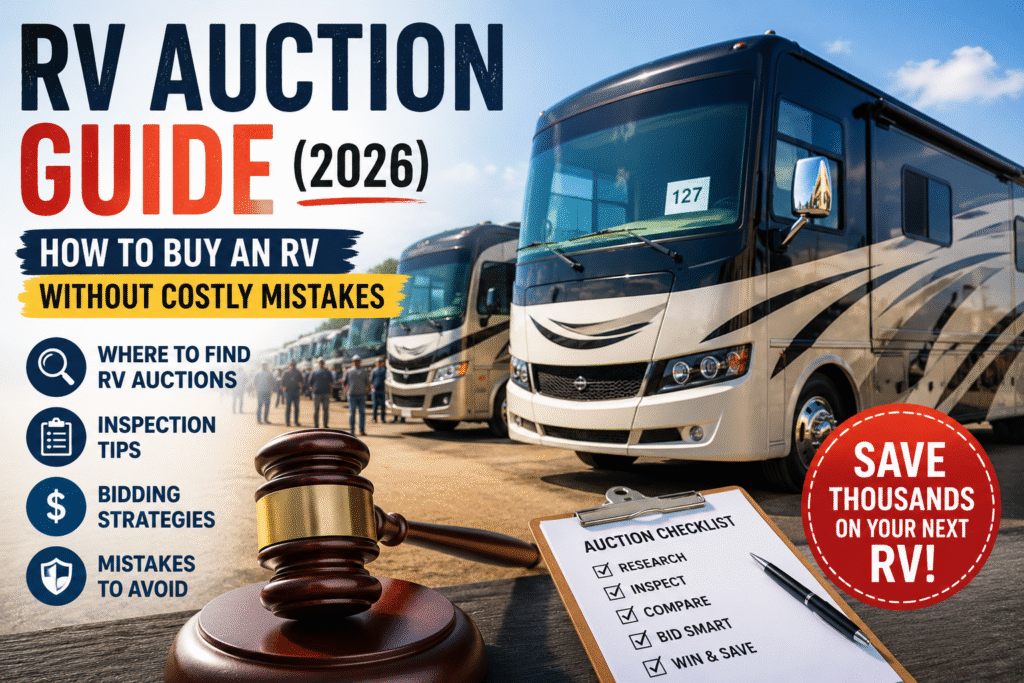
RV Auction Guide: Buying an RV at an auction can save you thousands of dollars compared to dealership prices, but it also comes with risks. This RV Auction Guide explains how RV auctions work, where to find them, what to inspect before bidding, common mistakes to avoid, and how to get the best value for your money in 2026.
However, lower prices don’t always mean a better deal.
Some auction RVs are well maintained and simply come from bank repossessions, rental fleet upgrades, or government surplus sales. Others may have hidden water damage, mechanical problems, salvage titles, or expensive repairs that aren’t immediately visible.
The difference between getting an incredible bargain and making an expensive mistake often comes down to preparation.
This guide explains everything you need to know before buying an RV at auction. You’ll learn how different auctions work, where to find them, what to inspect before bidding, the hidden costs many buyers overlook, and practical strategies that can help you purchase an RV with confidence.
Whether you’re looking for a Class A motorhome, Class B camper van, Class C motorhome, travel trailer, fifth wheel, or toy hauler, this guide will help you make an informed decision.
Table of Contents
- RV Auction Guide: What Is an RV Auction?
- RV Auction Guide: Why Are RVs Sold at Auction?
- Types of RV Auctions
• Government RV Auctions
• Bank Repossession Auctions
• Dealer Auctions
• Online RV Auctions
• Insurance & Salvage Auctions - How the RV Auction Bidding Process Works
- What to Inspect Before You Bid
- Hidden Costs Most Buyers Forget
- Common RV Auction Mistakes
- Pros and Cons of Buying an RV at Auction
- Is Buying an RV at Auction Worth It?
- Expert Tips for First-Time Buyers
- Frequently Asked Questions (FAQ)
- Final RV Auction Buying Checklist
RV Auction Guide: What Is an RV Auction?
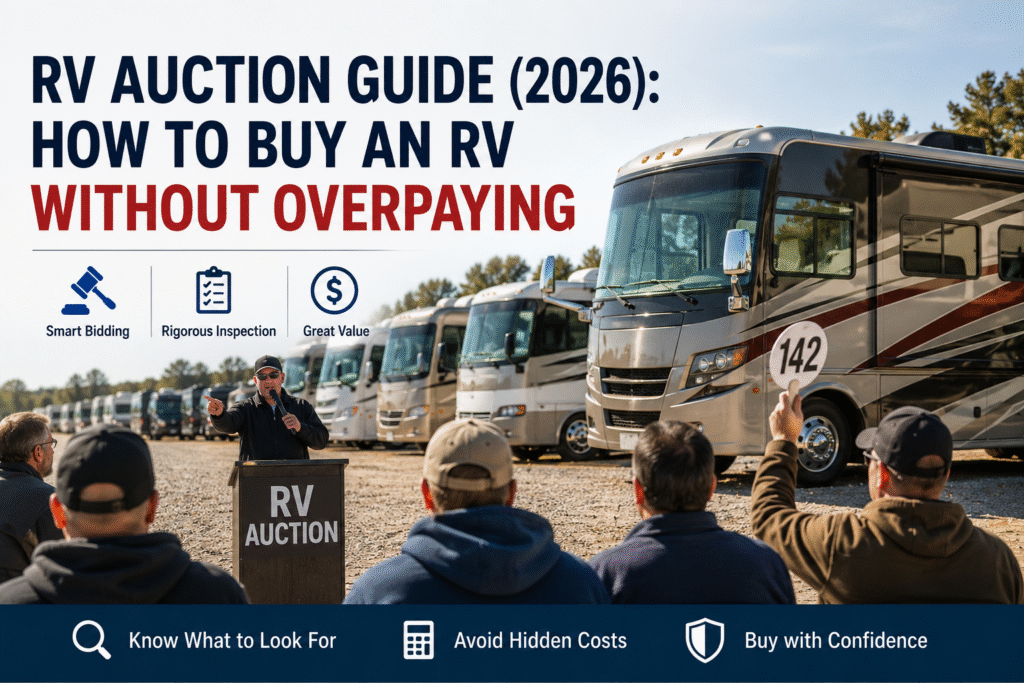
An RV auction is a marketplace where recreational vehicles are sold to the highest bidder instead of being offered at a fixed price. Auctions may be conducted in person, online, or as hybrid events that allow both types of bidding.
Unlike dealerships, auctions usually sell vehicles “as-is.” This means buyers are responsible for evaluating the RV’s condition before placing a bid. Most auctions provide basic information such as the make, model, year, mileage, and vehicle identification number (VIN), but warranties are uncommon.
You may find many types of recreational vehicles at auction, including:
- Class A motorhomes
- Class B camper vans
- Class C motorhomes
- Travel trailers
- Fifth-wheel trailers
- Toy haulers
- Pop-up campers
- Truck campers
Some auctions focus only on RVs, while others include cars, trucks, boats, construction equipment, and commercial vehicles. To learn more about RV manufacturing standards and industry best practices, visit the RV Industry Association (RVIA)
RV Auction Guide: Why Are RVs Sold at Auction?
Many first-time buyers assume auction RVs have serious problems. While some certainly do, that’s far from the whole story.
RVs arrive at auction for many different reasons, including:
Bank Repossessions
When owners stop making loan payments, lenders may repossess the RV and sell it at auction to recover part of the outstanding loan balance.
Dealer Trade-Ins
Dealerships often accept trade-ins when customers purchase newer RVs. Instead of keeping every used model on their lot, dealers frequently send older inventory to auction.
Rental Fleet Replacements
Large RV rental companies regularly update their fleets. Many of these RVs receive scheduled maintenance throughout their rental life before being sold.
Government Surplus
Federal, state, and local government agencies occasionally auction surplus recreational vehicles that are no longer needed.
Insurance Claims
Some RVs are sold after accidents, floods, hailstorms, or other insurance claims. These may carry salvage or rebuilt titles and require additional inspection.
Estate Sales
When owners pass away or families liquidate assets, RVs may be sold through auctions as part of the estate settlement process.
Understanding why an RV is being auctioned provides valuable context and can help you evaluate potential risks.
RV Auction Guide: Types of RV Auctions
Not every auction operates the same way. Knowing the differences can help you decide where to focus your search.
| Auction Type | Best For | Risk Level |
|---|---|---|
| Government Auctions | Budget buyers | Low to Medium |
| Bank Repo Auctions | Value shoppers | Medium |
| Dealer Auctions | Experienced buyers | Low |
| Online Auctions | Nationwide selection | Medium |
| Insurance/Salvage Auctions | DIY repair experts | High |
RV Auction Guide: Government RV Auctions
Government agencies periodically sell surplus vehicles that are no longer required for public service. These auctions may include campers, trailers, maintenance vehicles, and motorhomes.
Advantages
- Competitive prices
- Transparent bidding
- Clear ownership documentation
- Reliable auction process
Things to Remember
Availability varies throughout the year, and inventory can be limited depending on your location.
You can browse legitimate government surplus RV auctions through USA.gov.
RV Auction Guide: Bank Repossession Auctions
Banks repossess RVs when borrowers default on their loans.
Because financial institutions generally aren’t interested in storing vehicles, they often sell repossessed RVs quickly.
Advantages
- Prices below dealership value
- Wide selection
- Financing history often available
Risks
Maintenance may have been neglected before repossession, so careful inspection is essential.
Dealer Auctions
Some dealerships sell excess inventory through wholesale auctions.
These RVs are often newer and better maintained than vehicles found at salvage auctions.
Although dealer auctions may have higher prices, they frequently offer lower risk.
RV Auction Guide: Online RV Auctions
Online platforms allow buyers to participate from almost anywhere.
Advantages include:
- Large nationwide inventory
- Convenient bidding
- Detailed photos
- Vehicle history information (when available)
Before bidding, calculate transportation costs if the RV is located in another state.
Insurance and Salvage Auctions
Insurance companies sell RVs that have been declared total losses after accidents or natural disasters.
These auctions usually offer the lowest purchase prices—but also the highest risk.
Repair costs can easily exceed your budget if hidden damage isn’t discovered before bidding.
Unless you have experience restoring RVs or access to a trusted RV technician, salvage auctions are generally not the best choice for first-time buyers. Repair costs can easily exceed your budget if hidden damage isn’t discovered before bidding. Before buying a salvage RV, check the vehicle’s history using NICB VINCheck.
RV Auction Guide: Is Buying an RV at Auction Worth It?
The answer depends on your experience, budget, and expectations.
For buyers who research the vehicle, inspect it carefully, and stick to a realistic budget, auctions can provide excellent value.
However, buyers who bid emotionally or ignore repair costs often spend more than they would have at a dealership.
Instead of asking, “How cheap is this RV?”, ask yourself:
- Is the title clean?
- Can I verify maintenance history?
- What repairs will it need?
- How much will transportation cost?
- Will insurance premiums increase?
- Is this still a good value after repairs?
Those questions matter far more than the final auction price.
Pros and Cons of Buying an RV at Auction
Pros
- Lower purchase prices
- Large inventory
- Opportunity to find rare models
- Faster buying process
- Potential for significant savings
Cons
- Vehicles usually sold as-is
- Limited warranty protection
- Hidden repair costs
- Competitive bidding
- Transportation expenses
- Possible title complications
Renting an RV before purchasing one can help you decide which RV type best fits your travel style. Read our RV Rentals Near Me in Texas guide.
Expert Tip
Set your maximum budget before the auction begins.
Include:
- Purchase price
- Buyer’s premium
- Taxes
- Registration fees
- Insurance
- Repairs
- Transportation
- Immediate maintenance
Many first-time buyers focus only on the winning bid and forget these additional expenses. A disciplined budget can help you avoid turning a bargain into an expensive purchase.
Conclusion
Buying an RV at auction can be an excellent way to save money, but success depends on preparation, research, and careful inspection. By understanding the different types of RV auctions, checking the vehicle’s condition, setting a realistic budget, and avoiding common bidding mistakes, you can confidently purchase an RV that fits your travel goals without unexpected expenses.
If you’re not ready to buy, renting an RV first is a smart way to experience different RV types before making a long-term investment. Explore our RV Rentals Near Me in Texas guide to compare rental options and find the right RV for your next adventure:
Whether you choose to buy or rent, the right planning will help you enjoy safer, more affordable, and more memorable RV travels.