
Searching for RV campgrounds near me sounds simple—until dozens of listings appear and every campground promises a great stay. When comparing RV campgrounds near me, remember that the closest option may not fit your RV, provide the correct hookups, allow pets or place you near your planned activities.
This guide will help you compare campsite sizes, hookups, prices, locations, recent reviews and booking rules so you can confidently choose the right campground for your trip.
Quick Answer: How Do I Find RV Campgrounds Near Me?
To find RV campgrounds near me, enter your destination and travel dates, then filter the results by RV length, hookup requirements, price and amenities. Confirm availability on the campground’s official booking page and read recent reviews before paying. Popular campgrounds may require reservations well in advance.
Start With the Type of Camping You Want
Results for RV campgrounds near me may include private RV parks, national and state park campgrounds, RV resorts and basic public campsites. Each option provides a different combination of location, amenities and price.
| Campground type | Best for | What to expect |
|---|---|---|
| Private RV park | Comfort and longer stays | Full hookups, Wi-Fi, laundry and organized amenities |
| National park campground | Nature and sightseeing | Scenic locations but limited hookups and larger-RV restrictions |
| State park campground | Families and weekend trips | Trails, lakes, picnic areas and moderately priced campsites |
| National forest campground | Quiet, nature-focused camping | Basic facilities and fewer commercial amenities |
| Bureau of Land Management (BLM) camping area | Budget travel and boondocking | Developed or dispersed camping with limited services |
| RV resort | Travelers wanting more amenities | Pools, clubhouses, activities and higher nightly prices |
If you are unsure which experience suits you, read our guide explaining the difference between RV parks and campgrounds.
How to Find RV Campgrounds Near You in Five Minutes
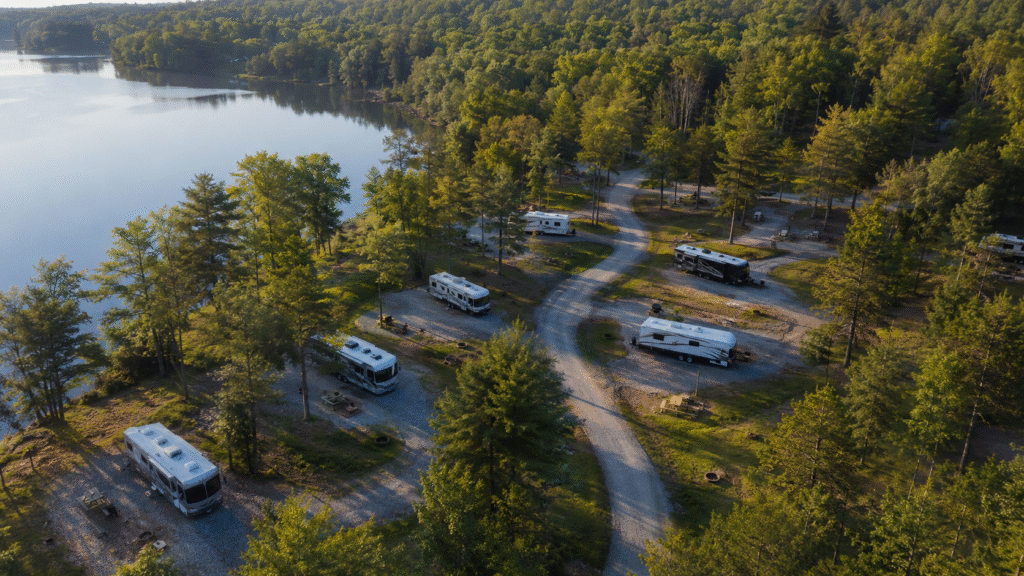
1. Search using a specific location
Instead of searching only “RV campgrounds near me,” add the city, attraction or national park you plan to visit.
Try searches such as:
- RV campgrounds near Dallas, Texas
- RV camping near Yellowstone National Park
- RV parks near Orlando with full hookups
- Pet-friendly RV campgrounds near me
- RV campsites near me for a 40-foot motorhome
A specific search normally produces more useful results than a broad nationwide search.
2. Enter your dates
Availability can change completely from one weekend to another. Enter your check-in and check-out dates before comparing prices or choosing a campground.
For federal campgrounds, use the official Recreation.gov campground search. It lists reservable camping locations across national parks, national forests and other federal recreation areas. Adding travel dates to an RV campgrounds near me search removes locations that are already full.
3. Add your RV information
Record these details before booking:
- Total RV length
- RV type
- Number of slide-outs
- Required electrical connection
- Number of travelers
- Tow vehicle length
- Pet requirements
- Accessibility needs
Do not assume that a campsite advertised for a 35-foot RV also has enough room for your tow vehicle. If the description is unclear, call the campground before paying.
4. Compare three suitable campgrounds
Do not automatically select the first result. Open at least three campgrounds and compare:
- Total price after fees
- Distance from your planned activities
- Site dimensions
- Electrical, water and sewer connections
- Check-in and cancellation rules
- Recent customer reviews
- Road and entrance conditions
This simple comparison can prevent an uncomfortable stay or a costly last-minute change. Before choosing between RV campgrounds near me, compare at least three options using the same checklist.
5. Confirm on the official website
Directory listings and map results can contain outdated information. Confirm the price, availability, amenities and policies directly with the campground or its authorized booking platform.
Which RV Hookups Do You Need?
Hookups are one of the most important differences between RV campsites.
Full hookups
A full-hookup site normally includes electricity, fresh water and a sewer connection at your campsite. This is convenient for longer stays and travelers who want to use their RV like a small home.
Partial hookups
Partial-hookup campsites may provide electricity and water but no sewer connection. The campground may offer a shared dump station instead.
No-hookup campsites
These campsites provide a parking pad without electricity, water or sewer connections. They can be less expensive and more peaceful, but you must manage your battery, fresh water and waste tanks carefully.
Check whether the electrical service is 20, 30 or 50 amps. Your RV and the campsite must be compatible.
Best Places to Search for RV Campgrounds
National Park Service
The National Park Service campground finder helps travelers locate camping inside national parks. The NPS advises checking the individual park website because rules, seasons and reservation requirements vary by location.
Recreation.gov
Recreation.gov is the primary reservation platform for many federal campsites. It allows travelers to search by destination, dates, equipment and amenities.
Bureau of Land Management
The Bureau of Land Management camping page explains developed and dispersed camping on BLM public lands. Rules and stay limits vary, so check the local field office before arriving.
State park websites
Each state operates its own park and reservation system. Search for the official state parks website, then filter by camping or RV sites. State parks can be excellent choices for lakeside stays, hiking and family weekends.
Private campground platforms
Private booking platforms can help you compare RV resorts, independent campgrounds and privately operated parks.
Reliable results for RV campgrounds near me can come from official government websites and trusted campground-booking platforms.
What Should You Check Before Booking?
Use this checklist before entering your payment information.
RV and campsite compatibility
Confirm the maximum RV length, parking-pad size, site surface and whether the campsite is back-in or pull-through.
Pull-through sites are usually easier for large motorhomes and travelers who do not want to disconnect a tow vehicle.
Location
A campground may appear close on a map but still require a long drive because of mountain roads, traffic or limited entrances. Check the actual driving time to the attractions you plan to visit.
Recent reviews
Prioritize reviews from the last six months. Look for repeated comments about:
- Cleanliness
- Road noise
- Wi-Fi quality
- Electrical problems
- Restroom conditions
- Staff responsiveness
- Site spacing
- Safety and lighting
One negative review is not automatically a warning. Several recent reviews describing the same problem deserve attention.
Cancellation policy
Read the cancellation deadline and refund rules. A low nightly rate is not a bargain if the entire payment becomes nonrefundable immediately.
Seasonal conditions
Some campgrounds close during winter, reduce services outside peak season or restrict campfires during dry weather. Verify operating dates and current alerts before leaving home.
Red Flags to Avoid
Be cautious when a campground listing:
- Does not disclose the full address
- Has no recent reviews or photographs
- Cannot confirm your RV will fit
- Requests payment through an unusual method
- Provides no written cancellation policy
- Lists amenities that cannot be verified
- Has repeated complaints about electricity or safety
- Shows a price that changes dramatically at checkout
Call the property when something is unclear. A two-minute conversation is cheaper than arriving at an unusable campsite.
How Far in Advance Should You Book?
There is no single booking window for every campground.
Popular national parks, holiday weekends and waterfront destinations can fill months in advance. Private RV parks near cities may have more last-minute availability, while some public campgrounds keep certain campsites for short-term release or first-come, first-served use.
Check the individual campground page instead of assuming every destination follows the same schedule.
What If No Campground Is Available?
Try these alternatives:
- Move your dates by one or two days.
- Search 20–50 miles outside the original destination.
- Check nearby state parks or national forests.
- Look for a partial-hookup site instead of full hookups.
- Consider a private RV park outside the main tourist area.
- Check for cancellations at different times of day.
- Split a long stay between two campgrounds.
If you need an RV for the trip, compare options in our RV Rentals Near Me Texas guide.
Frequently Asked Questions
How do I find cheap RV campgrounds near me?
Compare public campgrounds, state parks and national forest campgrounds before booking a private RV resort. Search slightly outside popular tourist areas and avoid major holiday weekends when possible. Always compare the final price after reservation and service fees.
What is the difference between an RV park and an RV campground?
An RV park generally focuses on vehicle access, hookups and longer stays. An RV campground may provide a more natural setting with fewer amenities. However, businesses sometimes use both terms interchangeably, so check the facilities instead of relying only on the name.
Can I stay overnight anywhere in my RV?
No. Parking does not automatically mean overnight camping is permitted. Rules vary between cities, businesses and public lands. Always verify posted signs, local regulations and land-management rules before staying overnight.
Are pets allowed at RV campgrounds?
Many campgrounds permit pets, but breed restrictions, leash rules and additional fees may apply. Check the campground’s written pet policy before booking.
Do RV campgrounds have electricity?
Some provide full or partial hookups, while others have no electricity. Confirm whether the site offers 20-, 30- or 50-amp service and whether it matches your RV.
Can I arrive at an RV campground without a reservation?
Some campgrounds accept walk-ins or operate first-come, first-served sites. Others require advance reservations. Calling ahead is the safest option, especially during summer, holidays and major events.
Final Thoughts
Finding the best RV campgrounds near me is not simply about choosing the closest location. The right campground must fit your RV, provide the connections you need and place you within a reasonable drive of your planned activities.
Start with your destination and dates, compare at least three suitable options and verify the important details directly with the campground. A few minutes of checking before you book can make the difference between a stressful arrival and an enjoyable RV camping trip.
Editorial note: This guide uses information from official public-land and campground-reservation sources. Campground prices, amenities, operating dates and policies can change. Always verify details with the campground before traveling.